Sep. 17, 2026
CRES brings a rural perspective to the national energy debate
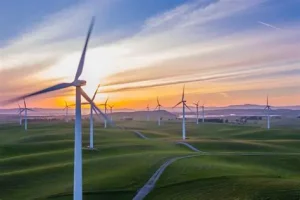
For decades, rural communities have been central to American energy production, but their interests have not always been well represented when energy decisions are made. Wind turbines and transmission lines cross farmland, power plants are built in rural counties, and the costs of the nation’s energy transition can fall disproportionately on people and communities that may not directly benefit from the infrastructure being built. A new research center at the University of Missouri aims to bring greater attention to those impacts. The Center for Rural Energy Security (CRES) was launched by the University of Missouri in 2025 to…
Aug. 30, 2026
News Advisory: Center for Rural Energy Security to release first research paper on rural economies
COLUMBIA, Mo. (Aug. 31, 2026) – The Center for Rural Energy Security (CRES) will host a news conference and panel discussion to release its inaugural policy research paper, “Powering Rural Prosperity: The Local Economic Impact of Utility-Scale Wind and Solar Developments,” on Thursday, Sept. 3. The study, authored by CRES-affiliated faculty Adrienne Ohler, associate professor; Austin Landini, a Center-affiliated research consultant; and Michael Sykuta, CRES director and associate professor, is the first policy research paper published by the Center, a multidisciplinary unit spanning Mizzou’s College of Agriculture, Food and Natural Resources; College of Arts and Science; and College…
July 27, 2026
Special session organized by CRES at AAEA 2026 examines how energy transition shapes rural development
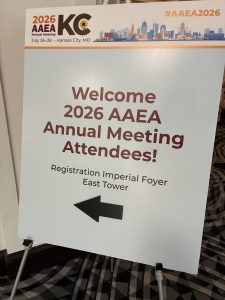
In our ever-modernizing society and economy, the demand for new electricity infrastructure across all energy sources will only continue to grow, with an outsized impact on rural communities. It is rural America that is increasingly tasked to host energy projects, projects that bring both opportunities and challenges to their areas in terms of land use, environment and local engagement. How that energy transition shapes rural development was the theme of a special session at the Agricultural and Applied Economics Association (AAEA) annual policy meeting on July 27 in Kansas City, entitled “Rural Development and Electricity Utility Infrastructure.” Organized…
June 29, 2026
CRES featured in Spring edition of Show Me Mizzou
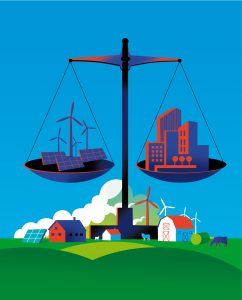
The Spring edition of Show Me Mizzou magazine introduced CRES to a generation of Mizzou alumni, in a story entitled “Lighting The Way.” In interviews with CRES Director Dr. Michael Sykuta, CAFNR and CRES affiliate Associate Professor Adrienne Ohler and Economics Department Chair and CRES affiliate Zack Miller, author Chris Blose’s story examines the unique mission of CRES; a first-of-its kind think tank dedicated to researching the impact of large-scale energy infrastructure projects on rural communities and people. As Dr. Sykuta notes in the story, while there is no…

May 26, 2026
CRES faculty address nuclear investments in Missouri
In a recent news article by University of Missouri NPR affiliate KBIA, CRES faculty address the history of nuclear energy investments in Missouri and the use of construction while in progress, or CWIP, as a financing mechanism to incentivize investment. Dr. Victor McFarland, Associate Professor of History, discussed the history of nuclear energy in the United States and the parallels between the 1970s and today’s energy demand needs. CRES Director Dr. Michael Sykuta discussed the importance of CWIP to incentivize investment in generation and the cost implications of allowing or disallowing CWIP when it comes to rate…
July 26, 2025
MU launches research center focused on energy in rural communities
On January 29, 2025, the University of Missouri’s local NPR affiliate KBIA reported on the creation of the Center for Rural Energy Security. In the report, CRES Director Dr. Michael Sykuta shares about the importance of having a research institute focused on energy policy issues facing rural communities and how CRES is being created to provide objective, scientifically sound research to inform energy policymaking. Read the entire article or listen to the on-air report.