Published on
In our ever-modernizing society and economy, the demand for new electricity infrastructure across all energy sources will only continue to grow, with an outsized impact on rural communities. It is rural America that is increasingly tasked to host energy projects, projects that bring both opportunities and challenges to their areas in terms of land use, environment and local engagement.
How that energy transition shapes rural development was the theme of a special session at the Agricultural and Applied Economics Association (AAEA) annual policy meeting on July 27 in Kansas City, entitled “Rural Development and Electricity Utility Infrastructure.” Organized by the Center for Rural Energy Security (CRES)and led by CRES affiliate scholar Dr. Adrienne Ohler, the session featured the presentation and discussion of four research papers dedicated to the topic.
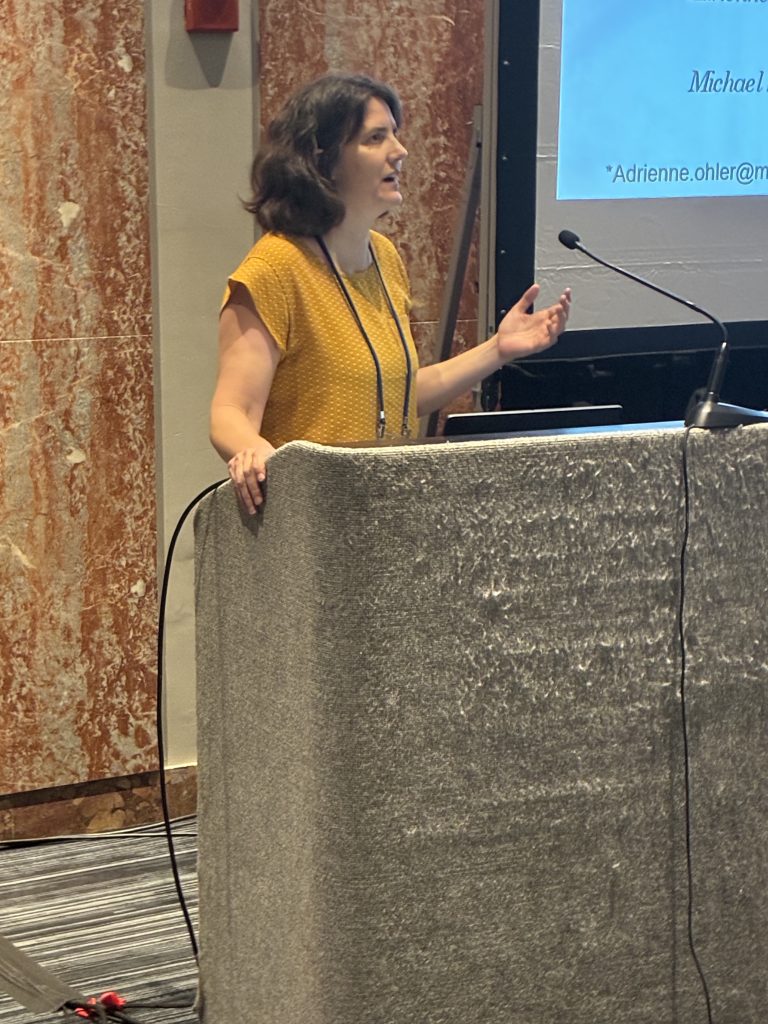
“Powering Rural Prosperity: The Local Impact of Renewable Wind and Solar,” authored by Ohler and fellow CRES scholars Dr. Michael Sykuta and Austin Landini, highlighted the session, providing new evidence that wind, but not solar, development is linked to rural economic growth, offering insights for regional energy and development policy.
The final findings from the paper are scheduled to be announced as the first official research paper to be released by CRES coming up in early September.
“The Long-Run Effects of Rural Electrification on the Provision of Power in Exurban Regions” was presented by Tim Fitzgerald of the University of Tennessee, co-authored by Wesley Burnett USDA-ERS.
Fitzgerald said that, despite the overwhelming time demands on them, rural citizens have traditionally been very committed to rural electric co-ops, to the benefit of their communities.
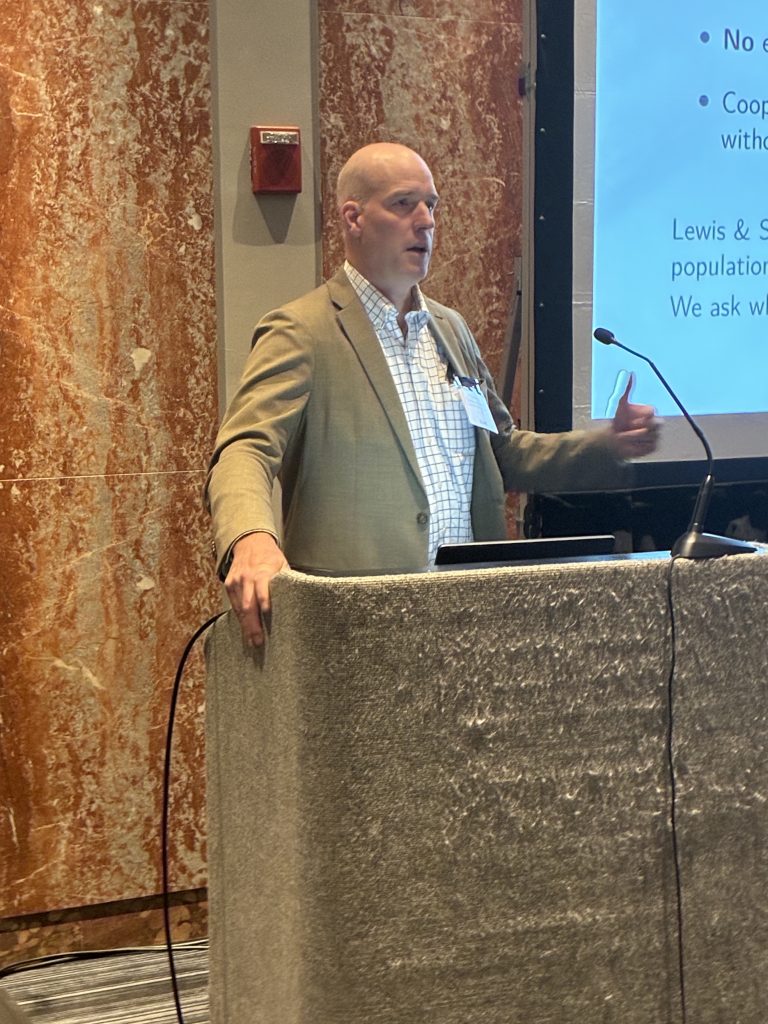
“Our research involves a long look-back, over 122 years of data, in rural America,” Fitzgerald said. “We were really interested in how rural electric co-ops, and that particular way of turning the lights on, has really affected those communities. What we found was that there was something about how rural co-ops work, and have worked for decades, that somehow makes rural communities, in some sense, stronger.”
Another of the four papers, “Who Pays for the Storm? Cost Recovery and Risk Allocation in Rural Electric Cooperatives versus Investor-Owned Utilities”, was presented by Hrozencik. His co-authors on the paper are Mani Rouhi Rad and Liqing Li of Texas A&M University, and Dilek Uz of the University of Nevada-Reno (who is also a Utility Policy Fellow at the Financial Research Institute at the University of Missouri).
As the temperature climbed past 100 degrees with a heat index pushing up near 120 outside in downtown Kansas City, the research of Hrozencik and his fellow authors had some telling conclusions going forward.
“The type of utility that you are served by, which generally is not a choice for any of us when we buy a house, really influences how the costs of climate change and their associated extreme storms are translated into your monthly expenses,” he said. “These extreme weather events are becoming more common, and we show in our research that the cost of them, at least through electricity distribution infrastructure, is going to continue to increase over time, especially for rural households just by virtue where they get their electricity from.”
Xiaochen Sun’s paper, “Can Place-Based Incentives Accelerate the Energy Transition? Evidence from the Inflation Reduction Act’s Energy Community Tax Credits,” investigated how energy community tax credits in the Inflation Reduction Act influence renewable investment across fossil-reliant and rural areas.
“Our research into place-based tax credits shows that there is no ‘silver bullet’ in terms of what the best policy is,” said Sun, of New Mexico St. University. “There are trade-offs across different policy designs and the key to success is knowing the policy’s goals and having them designed accordingly.”
The opportunity to have other researchers examine and provide input on each presenter’s paper, providing guidance on how each paper could be improved upon, was a valuable experience provided by the session.
“Extremely proud to have organized our AERE @ AAEA panel on rural utility infrastructure and development,” said Ohler. “It was a fantastic session where researchers received highly informed feedback and rich exchanges from fellow experts who deeply understand both the datasets we are analyzing and the real-world concerns of rural economies, land use, and the importance of local community culture.”