Published on
For decades, rural communities have been central to American energy production, but their interests have not always been well represented when energy decisions are made. Wind turbines and transmission lines cross farmland, power plants are built in rural counties, and the costs of the nation’s energy transition can fall disproportionately on people and communities that may not directly benefit from the infrastructure being built. A new research center at the University of Missouri aims to bring greater attention to those impacts.
The Center for Rural Energy Security (CRES) was launched by the University of Missouri in 2025 to conduct energy research with a rural perspective, focusing on how federal and state energy policies and technological innovations affect rural communities, agriculture, and economic growth. The Center’s work is intended to help ensure that rural issues are considered in broader conversations about the future of energy policy.
As the first university-affiliated energy policy research institute in the country to focus exclusively on energy policy and technology innovation for agriculture, rural communities, and rural economic development, CRES released its first policy research paper on September 3. Focusing on the economic impact of utility-scale renewable projects in rural areas, the paper reflects the Center’s mission of conducting objective, nonpartisan, policy-relevant research. That mission fills an important gap: rural America has lacked a dedicated research institution focused specifically on its interests in energy policy.
The timing is important. The idea for the Center grew from conversations about the challenges farmers, ranchers, and landowners face as the nation undergoes a major transition in power generation and transmission. Solar farms, wind installations, battery storage facilities, and new high-voltage transmission corridors are reshaping rural landscapes, often faster than policy research can assess what those changes mean for the people living through them. The current national debate over data centers, many of which are being proposed and built in rural areas, is one recent example.
A central part of CRES’s mission is its commitment to independent, nonpartisan research. Our team conducts research and analysis to inform decision makers and policy experts on rural energy security matters. Energy policy debates are often shaped by competing political and ideological priorities, making rigorous, objective research particularly useful. Elected officials, legislative staff, and industry regulators at the local, state, and federal levels need reliable and timely analysis of the potential economic and social effects of energy policy decisions. CRES works to provide that analysis through research papers, training programs, policy briefs, and invited testimony.
CRES draws on a multidisciplinary team of University of Missouri scholars spanning economics, mechanical and aerospace engineering, history, and public affairs. That range reflects the fact that energy security in rural America crosses disciplines. It affects property rights, food security, economic development, the physical infrastructure that keeps farms and small towns running, and national security.
Rural America produces a substantial share of the country’s energy, and decisions about how that energy is produced and transmitted have consequences beyond rural communities themselves. Those communities therefore warrant sustained research, analysis, and policy attention as the nation’s energy landscape changes. CRES is building the research capacity to help provide it.
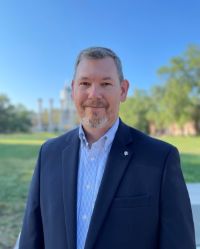
Dr. Mike Sykuta is the Director of the Center for Rural Energy Security at the University of Missouri, Columbia. He can be reached at (573) 882-1738 or at SykutaM@missouri.edu.