Published on
(This story appeared in the October 2026 issue of Public Utilities Fortnightly)
It has been a long-standing, critical debate across rural America.
In an era when the increasing needs for energy production and the infrastructure supporting it continues to spike across the country, what effect do hyper scale renewable energy projects have – economically, environmentally, and culturally – on the rural communities where most such projects are located?
According to the first research study released by the Center for Rural Energy Security (CRES), a new think tank established in 2025 at the University of Missouri, Columbia, renewable energy and agriculture can co-exist without harming rural economies. The study, “Powering Rural Prosperity: The Local Economic Impact of Utility-Scale Wind and Solar Developments,” was officially released on Sept. 3, 2026, in an event on the University of Missouri campus that included a panel discussion with key statewide stakeholders.
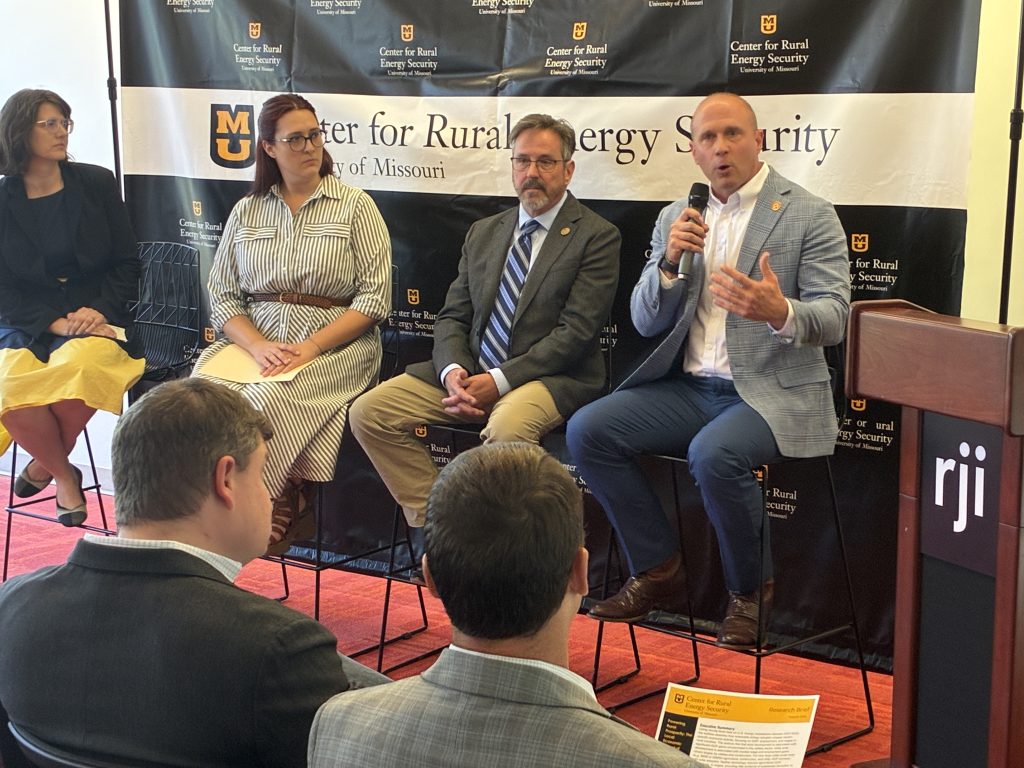
“For counties with wind and solar developments, we found modest positive economic impacts, but the benefits varied across sectors,” said CRES-affiliated faculty Adrienne Ohler, associate professor of applied economics at MU and lead author of the study. “More research is needed to understand why renewable energy is sited in some counties while not in others, as those underlying factors may also influence long-term economic growth.”
Key findings from the study include:
- Agriculture is not negatively affected, with no meaningful declines in GDP, no significant reductions in agriculture employment, and no evidence of lower agricultural wages
- Wind development produces significant and persistent increases in county GDP, largely driven by the utilities sector
- Solar development has smaller effects on overall economic output, with little evidence of significant increases in county GDP and any positive effects concentrated in utilities and construction
The full report can be found here: https://cres.missouri.edu/research-reports
CRES was founded at the University of Missouri in 2025, with aspirations of becoming the go-to energy policy think tank in the U.S. for understanding the implications of federal and state energy policies and technology innovation for rural America. Executive Director Michael Sykuta said this first study released by the Center is just the kind of research that ensures that rural America will not be overlooked in the future when it comes to developing energy policy.
“Objective, fact-based research like this, produced by our CRES team of scholars, is what policymakers need when analyzing the economic, environmental, health and cultural impacts of energy projects in rural America and energy policy more generally,” said Sykuta. “In alignment with CRES’s mission, we seek to fill the information void about how energy infrastructure – power lines and pipelines; wind turbines and solar panels; coal, gas and nuclear plants – affects the communities where they are located.”
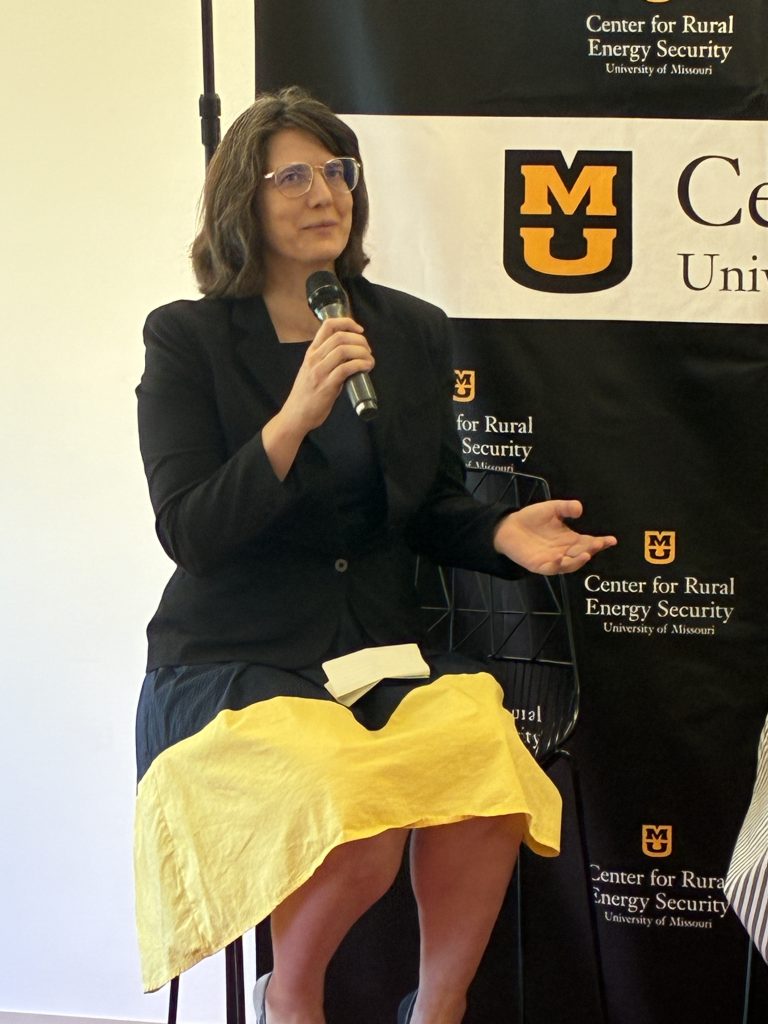
Joining in a panel discussion with Ohler, after her paper’s release, were key stakeholders who will benefit from the valuable work that CRES is doing, including Kurt Schaefer, director of the Missouri Department of Natural Resources and Garrett Hawkins, president of Missouri Farm Bureau, the state’s top agricultural advocacy organization. Jana Rose Schleis, a leading regional agricultural and energy reporter for NPR-affiliate radio station KBIA, also participated in the panel discussion.
As director of the state agency that is currently developing the state of Missouri’s energy plan, Schaefer sees CRES as playing a critical role in helping shape future policy, especially with the coming overwhelming demand.
“The decisions that we make today are going to dictate, really, what happens into 2040, 2050,” Schaefer said. “We’re seeing demand of 2%, possibly up to even 3% annual growth, potentially up until 2040. That’s energy growth in base- load demand that we have never really seen in this country.”
Hawkins echoed Schaefer’s point about the future, with CRES being well-positioned to be perhaps the rural energy policy think tank of record in the U.S.
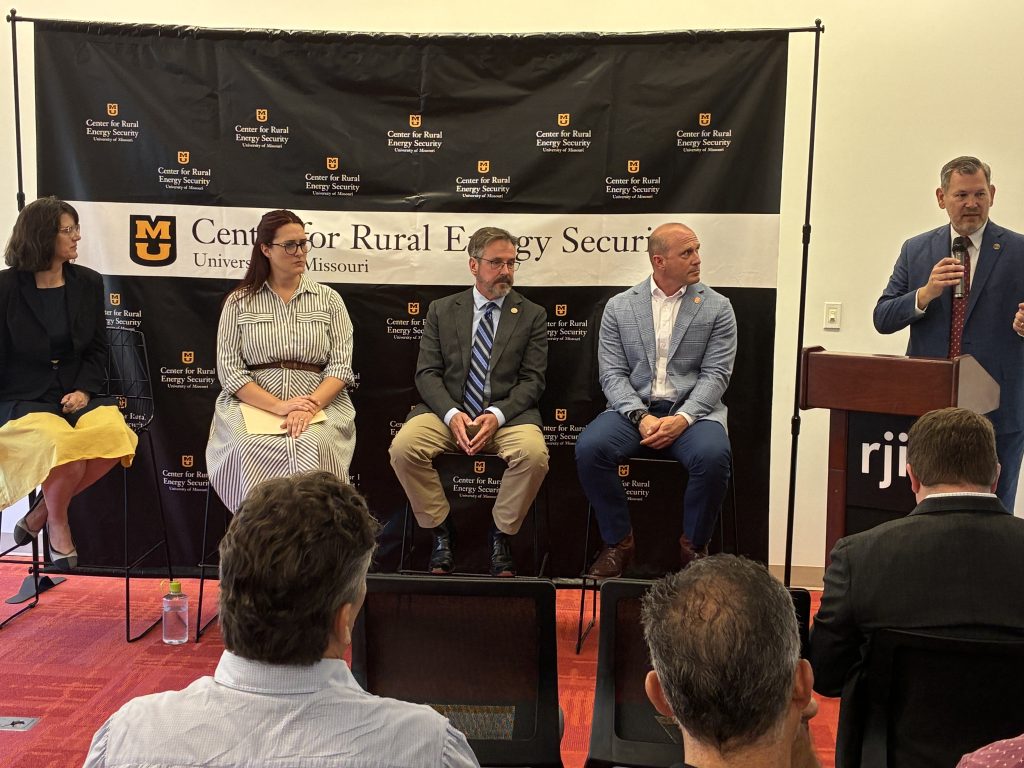
“In so many critical areas, America is at a crossroads, seeing the most critical and impactful shift in energy policy at the national level we have seen in some time,” Hawkins said. “We have seen how policymakers around the country and in Washington, D.C. have looked to Mizzou for objective food and ag policy analysis in the past – why can’t Missouri also be home to a think tank that represents rural America on energy issues? I think CRES does that, putting Missouri on the map as the place policymakers from around the nation come for objective, non-partisan analysis.”
Looking ahead, CRES scholars plan to expand research to cover additional dimensions of federal and state policies in hope of filling a critical need, one that Center leaders are eager to fill.
“Our policy researchers matter,” said Sykuta. “CRES is helping decision makers in Missouri and across the country to better understand how energy policies and technology innovations affect rural citizens, farms, businesses, and communities. This information will help our local, state and national leaders to make better-informed decisions in the future.”
For more on CRES, go to: https://cres.missouri.edu/
###
John Fougere is Senior Strategic Communications Consultant at the Center for Rural Energy Security (CRES) at the University of Missouri. CRES advances unbiased research, education, and collaboration for understanding the implications of federal and state energy policies and technology innovation in rural America.