Published on
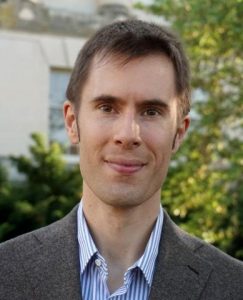
CRES Affiliated Scholar Victor McFarland, Associate Professor and Director of Graduate Studies in the Department of History at the University of Missouri Columbia, recently sat down with Senior Strategic Communications Consultant John Fougere to discuss his professional path and what motivates him as a researcher.
1.) What led you to pursue a career in higher education and more specifically, to become a researcher in areas like energy, the environment, and U.S. relations with the Middle East?
I always loved studying history, and I wanted to keep doing it as long as anyone would let me! That led me to graduate school, and eventually an academic career.
I started my Ph.D. program in the late 2000s. Energy was all over the news because of the Iraq war, high oil prices, and growing awareness of climate change. I wanted to know more about the historical background of those issues. I was especially curious about the 1970s energy crisis, the last time that energy had been so central to U.S. politics and foreign policy. At that time, the federal government had invested in all kinds of alternatives to foreign oil, everything from nuclear power to domestic fossil fuels to early experiments with wind and solar. But since those efforts were only partially successful, and some of them (especially the research into renewables) took a long time to pay off, the United States also tried to guarantee its access to overseas oil. The Nixon, Ford, and Carter administrations all doubled down on U.S. ties with Saudi Arabia and other oil-producing countries around the Persian Gulf.
The 1970s were an interesting period to study when I was in graduate school because many (though definitely not all) classified U.S. government records from that era were being released to the public for the first time, after about 30-40 years of secrecy. I also had a longtime interest in the modern Middle East, and I’d been studying Arabic since I was an undergraduate. That led me to focus on U.S.-Saudi relations and oil for my dissertation and first book.
2.) What brought you to the University of Missouri, and how did you become affiliated with CRES?
I joined the Mizzou faculty in 2014. Teaching at a research university like Mizzou means being surrounded by people working on all kinds of fascinating projects in different fields. Most of the time, though, you end up seeing colleagues in your own department – the folks around the office every day – and you don’t get enough chances to learn about the research being done elsewhere on campus.
At CRES events, I get to talk with colleagues from other departments – everyone from economists to engineers to lawyers – who share an interest in energy. My own work is usually national or even international in focus, so I’ve also appreciated the chance to think about the specific ways that energy developments impact Missouri.
3.) How would you describe your overall research focus?
I think of myself as an energy historian. I have special interests in oil, gas, nuclear power, and renewables in the late 20th century, as well as oil and U.S. relations with the Middle East.
4.) What is one research project that you are most proud of?
The research for my dissertation – what became my book Oil Powers – was challenging. I worked with Arabic-language sources, and I had to find ways around the limits on public access to government records in both the United States and Saudi Arabia. That meant using a variety of strategies, like reading Saudi newspapers and published documents, or interviewing former officials, or using Freedom of Information Act requests to get at U.S. records that were still classified. Some documents were closed to the public, and others had been released but were heavily redacted. That all meant reading between the lines and triangulating between the sources that were available to fill in the gaps.
5.) Finally, what is an ongoing research project that you are excited about?
I’m working on a book about nuclear fracking – a set of experiments by the U.S. Atomic Energy Commission (AEC) to produce oil and gas with nuclear explosives in the 1960s and 1970s. By the mid-20th century, geologists and petroleum engineers already knew there were large reserves of energy locked up in underground rocks that weren’t permeable enough for conventional drilling. Today, oil and gas companies get at those reserves with hydraulic fracturing, or “fracking.” In the 1960s, though, modern fracking techniques hadn’t been perfected yet. Instead, the AEC, and its partners in private industry, detonated nuclear explosives thousands of feet underground, breaking up the rock and making the oil and gas available for extraction. Nuclear fracking was tried three times in New Mexico and Colorado (1967, 1969, 1973). If it had proceeded to full commercial deployment, there was talk of using about 30,000 nuclear explosives to frack for natural gas in the western United States.
I’m researching the history of this program, the U.S. government’s motives for attempting it, and the reasons why it was eventually abandoned after 1973. Nuclear fracking is a fascinating window into an era when there was tremendous optimism about nuclear power. The AEC imagined all sorts of uses for nuclear technology that didn’t come to pass. Nuclear fracking is also an interesting case study in how new energy technology is developed (sometimes successfully, sometimes not), and it’s part of the backstory for hydraulic fracturing, which has transformed the American oil and gas industry over the last 20 years.