Published on
When it comes to energy efficiency, the promise of artificial intelligence (AI) is in its capacity to optimize systems that are too complex for humans to tune manually. Power grids, buildings, factories, and transport networks all generate enormous streams of data, and AI can take that data and turn it into real-time decisions that cut waste.
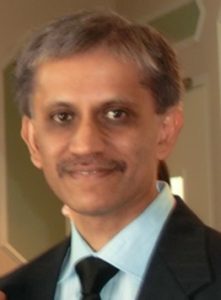
That was the focus of Sanjeev Khanna, a professor of Mechanical Engineering in the University of Missouri’s College of Engineering and an affiliated scholar of the Center for Rural Energy Security (CRES). Along with fellow College of Engineering researcher Saad Alsamraee, Khanna used a type of AI to revolutionize how large college campuses – including the University of Missouri’s own – energy use. Their goal was to help institutions across the country optimize efficiency and reduce operational costs while cutting carbon emissions.
In a 2025 published study, Khanna and Alsamraee analyzed six years of data collected from the University’s Combined Cooling Heat and Power Plant between 2017 and 2022. The data included campuswide energy usage and environmental variables such as air temperature, humidity, wind speed/direction and solar radiation – all tracked hourly. Using machine learning, the research team successfully forecasted the campus’s energy demands for 2023 with an astounding accuracy of 94%.
“By knowing when there are going to be peaks and valleys and how much energy will be needed, even on an hour-by-hour basis, we can ultimately help power plants better plan ahead so they can be as efficient as possible with energy use,” said Khanna, one of 12 CRES affiliated scholars. “This research can help universities and industries reduce carbon emissions and save money.”
The ability to predict energy lulls also enables universities to better schedule maintenance breaks with minimal disruption.
While this study focused on the University of Missouri’s energy data, the findings show that machine learning can help power plants across the country operate more efficiently.
Khanna, a professor of mechanical engineering and the director of the Midwest Industrial Assessment Center, has received continuous support from the U.S. Department of Energy over nearly the past 20 years. His work throughout Missouri has not only helped local industries reduce energy use and carbon output — it has also decreased the state’s electric demand by approximately 300 megawatts and delivered an economic impact exceeding $120 million, while reducing carbon emissions by more than 0.8 million tons annually.
“The collaboration at Mizzou sets us apart from other universities,” Khanna said. “The administration is very supportive of outside-the-box thinking, and working at a land-grant university has allowed our research to help industries all across the state.”
So it would seem that, used wisely, AI won’t replace the need for clean energy and good policy, but it can be a powerful multiplier, helping us get more useful work from every unit of energy we generate. The breakthroughs brought upon by the research of CRES’s Sanjeev Khanna are proof of just that.
###